Since the late 1990s, DePaul University has held the distinction of being the largest Catholic university in the United States. Despite the significant swell of the university’s student population, DePaul’s English Department in Chicago’s vibrant Lincoln Park neighborhood is remarkably close-knit—home, in every sense, to a diverse body of undergraduate and graduate students, nurturing faculty, and alumni who maintain lifelong connections with their former professors. The annual Spring English Conference is the fruit of this passionate space, where student writing, returning alumni, and a ceremony of academic achievements represent the unity and fertility that endears this community to so many of its members.
This year’s conference was ripe with accomplishments. Not only did panels of student work and alumni professionals showcase initiative and success, but the department also celebrated Distinguished Writer in Residence Mark Turcotte’s recent appointment as the sixth Illinois poet laureate. Guillermo Vásquez de Velasco, dean of the College of Liberal Arts and Social Sciences, aptly characterized the department as one of those “spaces where our voices can make a difference,” fostering students’ confidence and inspiring them to take their own voices and experiences beyond the classroom and into spheres of writing and publishing in the world at large.
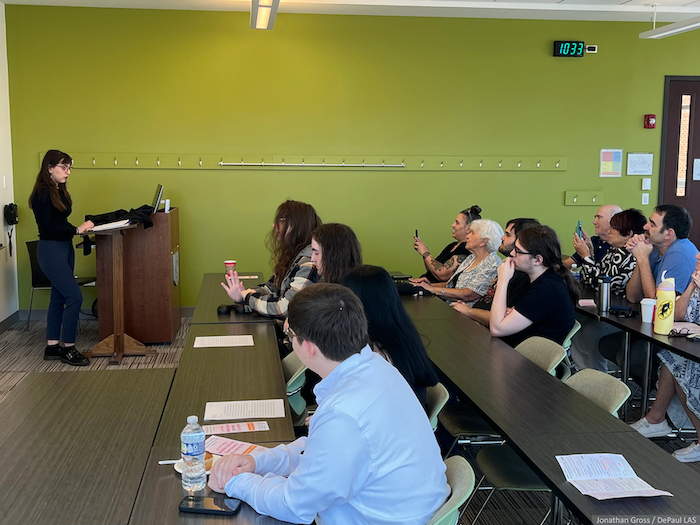
The alumni panel particularly aimed to help set students up for success and provided a networking opportunity with writers, editors, and teachers in the field. One of the distinguishing elements of DePaul’s graduate English programs is the emphasis on publishing as part of a writer’s practice and skills. Jess Macy (MFA ’22), a literary associate who stayed on at Folio Literary Management after getting her start as a literary assistant via DePaul’s internship program, gave insights for future editors and agents and shared how prospective freelancers can thrive in the editing market. Kaitlin Lounsberry (MAWP ’19)—who leads the Publishing Internship Program at Brink Literacy Project and serves as copyeditor, proofreader, and senior editor for F(r)iction literary magazine—contributed to the discussion on editing and publishing, while CEO and Principal Consultant Tim Hillegonds (MAWP ’12) of Thrive Creative described the “tenacity” that interns should embody in publishing house positions. Margo Arruda (MALP ’20), a doctoral candidate in English and tech ethics at the University of Illinois Chicago, advised students on how to stand out on applications to PhD programs, the benefits of fellowship programs and academic conferences, and which types of teaching positions best serve the needs of educators and researchers. Macy and Lounsberry particularly stressed the résumé-building importance of good internship programs, from those at external literary magazines, to ones offered to grad students by the DePaul-affiliated Big Shoulders Books.
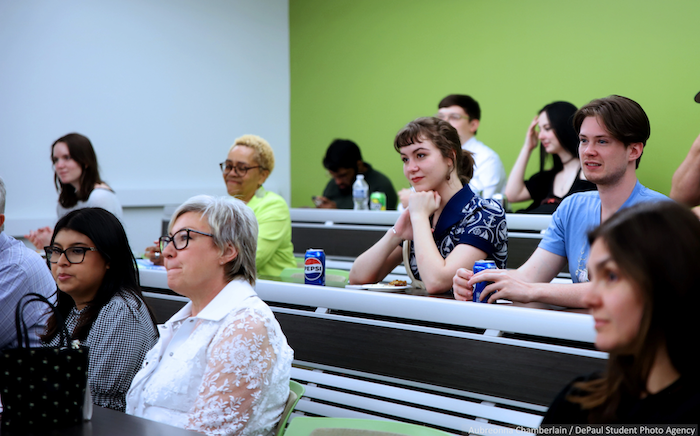
Along with their professional prowess, all four alumni are published authors and brought their writing experience with them to the panel. They described how developing a “habit of writing” inspires writers to start thinking “in a writerly way” and highlighted the inseparable connection between writing and editing: The more a writer reads submissions and works with other authors, the more they begin to understand what their own writing needs or where their work “isn’t working.” In discussing the best methods of publicity for new authors and how connections with other authors can contribute to a world of “good literary citizens,” the alumni also tackled audience questions about good self-publishing practices and gave a nuanced outline of the ways social media platforms may or may not affect a writer’s readership.
In a spirit that resonates with countless uncertain college students, several of the students who attended the panel were not only interested in their future careers but also anxious about how to protect their mental health among the pressures, and pace, of the professional world. The panelists stressed that pursuing a work-life balance and “prioritizing well-being” is crucial for combating burnout and losing passion for the “love of reading” that writers and editors often possess at the start of their careers. Addressing the constant flow of digital correspondence that editors face—and the fears of some young editors of looking “inadequate” if they do not overload their schedules—the panelists also emphasized “protecting your time and knowing your worth.” They also advised new writers to “give [them]selves grace” to slow down and step back when their manuscripts are not coming together, preventing the spiral of overwork and writing fatigue. Two DePaul alumni in the audience added that students should know that their skills as an English major are “very valuable”—and that sometimes graduates in the workplace will “need to convince people how valuable they are.” In connecting students with alumni knowledge and resources, the conference left students feeling comforted and empowered in their uncertain-yet-exciting futures.
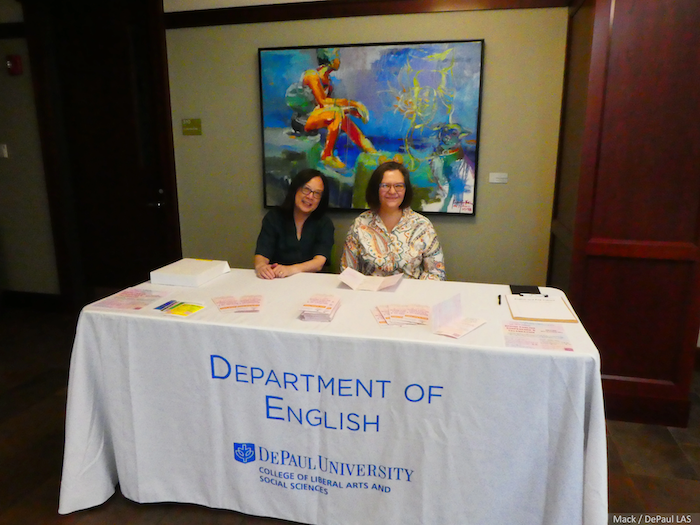
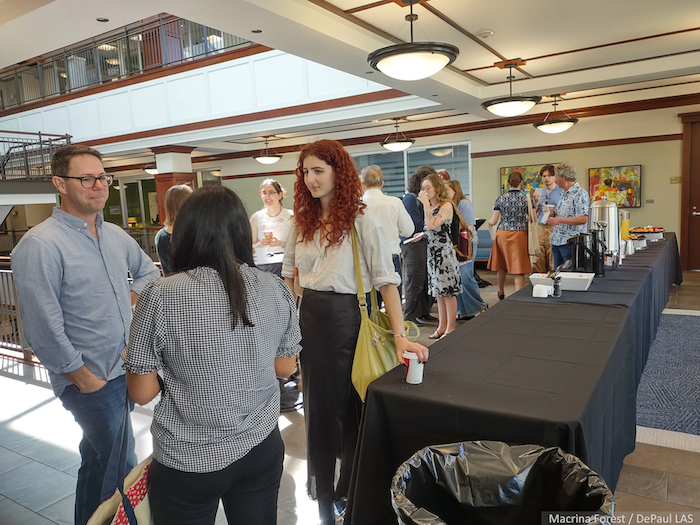
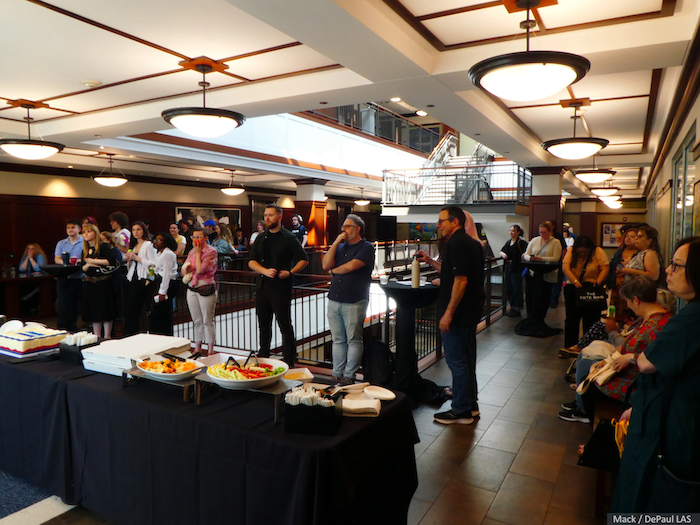
Outside of the alumni panel, the conference featured six student panels of literary analysis and creative writing, a reading of MFA student theses, and an awards ceremony for high-achieving students, some of whom will be graduating with distinction in English. As current and former students mingled with family, friends, and faculty over slices of celebration cake, the contagious excitement in the Arts and Letters Hall affirmed that, for its English majors, DePaul will always be a supportive home that will celebrate their journey, encourage their growth, and inspire their passion during and after their time within its walls.
Macrina Forest is a graduate assistant and MA student in DePaul University’s Literature and Publishing program. She is currently the editor of The Underground and Ex Libris, the English Department’s two official blog websites, as well as a content creator and editor for the department’s social media pages. Her work has been featured in Equatorial Literary Magazine and DePaul’s Creating Knowledge: The LAS Journal of Undergraduate Scholarship. She holds a BA in English from DePaul, with minors in Irish studies, classical studies, and the history of art and architecture.